About
The African Portrait Gallery
A Curated Record of Vision, Courage, and Responsibility
Through portraits, articles, features, and curated profiles, APG documents the stories of individuals whose work and leadership advance society, culture, knowledge, and human dignity. The Gallery selects people not by visibility alone, but by conscience, impact, and enduring contribution. By dedicating part of its curated images to leaders who are still actively shaping outcomes, the Gallery positions portraiture not as retrospective tribute alone, but as a living conversation with the present—and a responsibility to the future.
Inside the Gallery
The Image Curation Project
A disciplined collection by which leadership, memory, myth, and ideas may be examined.
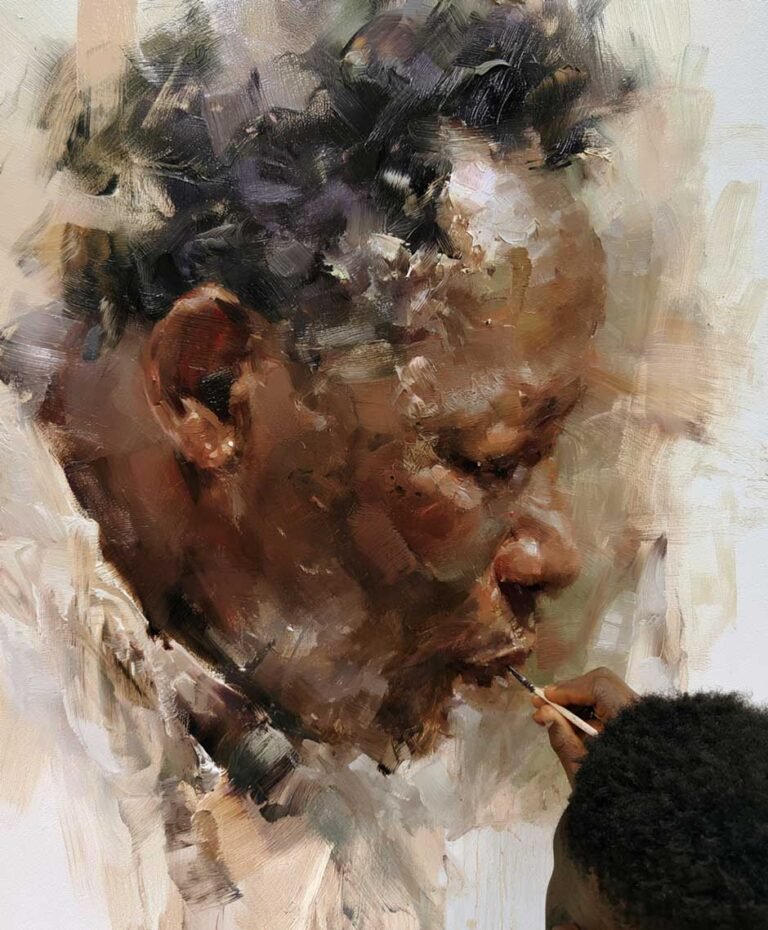
LIVING MODELS
PAST HEROES
CONCEPT PORTRAITS
Curatorial Structure and Philosophy
At the center of the African Portrait Gallery’s curatorial mission is a structured archive known as The 99 Model Project—a disciplined yet open framework for identifying our image models. The project is organized across four interrelated categories, each comprising thirty-three carefully considered representations. Together, the images form a balanced visual and intellectual system through which leadership, memory, myth, and ideas are examined.
King
Mandela
Malcolm X
Nkrumah
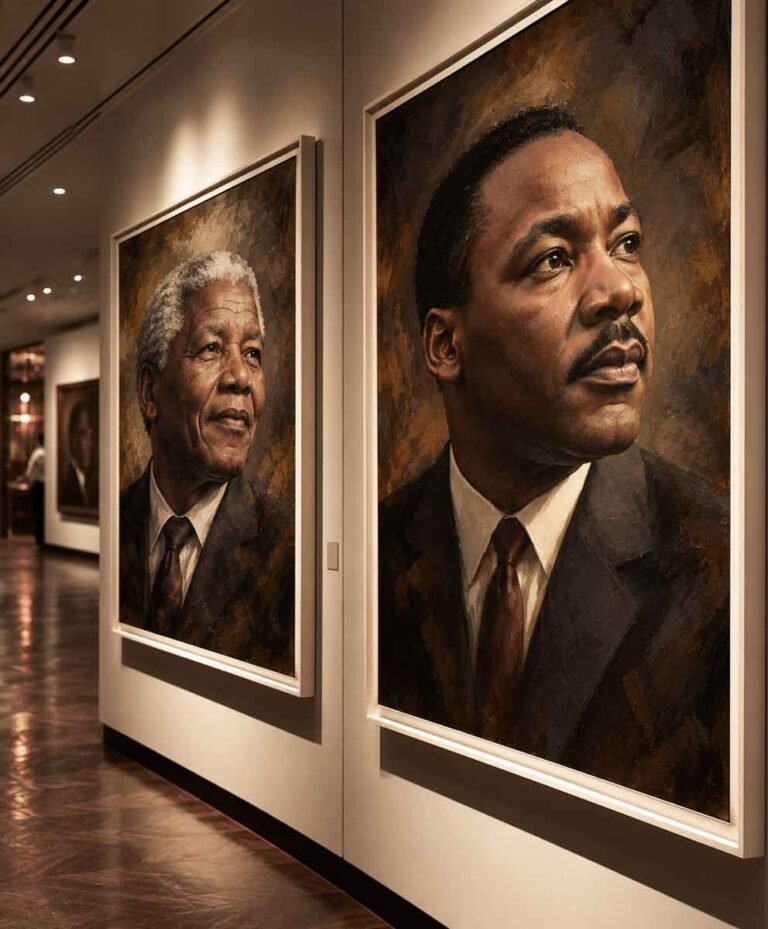
At the heart of the APG vision stand four exemplary past leaders—Martin Luther King Jr., Nelson Mandela, Malcolm X, and Kwame Nkrumah —who are presented not as distant icons, but as foundational models of leadership. Behind them are other great late Africans curated in what we call the Evergreen Room. These four leaders articulate enduring ideals: moral courage, ethical responsibility, self-determination, reconciliation, and service beyond self. These ideals serve as the curatorial framework for evaluating and curating all ninety-nine selections across the three broad image categories in the Art Gallery. Guided by this foundation, African Portrait Gallery is committed to identifying and presenting first, thirty-three living individuals—Africans, people of African descent, and possibly, select individuals of non-African descent—whose lives and work have tangibly advanced Africa and Africans. By placing historical exemplars in deliberate dialogue with living leaders and cross-cultural contributors, the Gallery affirms that Africa’s advancement has always been—and remains—a shared human endeavor led by those willing to invest intellect, resources, creativity, and courage in its unfolding future. The principles guiding our understanding of heroism, merit, mentorship, and impact are further articulated in our Background and Curatorial Philosophy, which defines how our ninety-nine image models are identified, evaluated, and presented within the Gallery.
— Prof. Ernest Obukx Agoba (Founder)
APG, Portraiture, and Leadership Discuss
The African Portrait Gallery empowers creators by centering their voices and their images on leadership dialogues across Africa and the diaspora. By weaving portrait art content with context, this process elevates narratives, validates lived experience, and connects creators to decision-making spaces, enabling collaborative storytelling and mentorship.
From Archive to World Stage: African Portrait Exhibitions
The African Portrait Gallery (APG) brings its vision to life through on-site exhibitions held across the globe, transforming its collections into a traveling cultural and intellectual experience. These exhibitions present Living Models, Historical Leaders, Mythic Figures, and Idea Portraits, allowing audiences to engage not only with images, but with the deeper ideas and values they represent. Guided by core principles such as moral courage, self-determination, and service, each exhibition becomes a space for reflection and dialogue on leadership and Africa’s global influence. Beyond display, APG integrates lectures, discussions, and educational programs, turning each event into an active platform for learning and cultural exchange. Through this global presence, APG positions African portraiture as a central voice in international conversations on art, leadership, and human progress.
Global Exhibitions: African Portraiture in Motion
MEMBERSHIP AND SUBMISSIONS
The Gallery operates as a moderated platform that welcomes participation from artists, photographers, writers, researchers, and members of the public. Through membership and submission features, individuals may submit profiles and images of achievers, contribute images, or provide written material for consideration. All submissions are reviewed by our curatorial team to ensure that the standards of seriousness, integrity, and intellectual responsibility that define the Gallery are maintained.
Partnership and Support
The growth of the African Portrait Gallery depends on collaboration with institutions, organizations, artists, scholars, and supporters who share the vision of preserving cultural memory through art and documentation. Partnerships make possible exhibitions, research projects, educational programs, and the continued development of the Gallery as an international cultural institution.
Stewardship and Impact of Contributions
Support to the African Portrait Gallery (APG) sustains a comprehensive cultural mission—advancing preservation, artistic production, education, research, exhibitions, and the development of a gallery archive dedicated to image preservation. Through this support, the Gallery can undertake critical documentation projects, commission original portrait works, host public lectures, develop youth-centered programs, expand its digital archives, and organize international exhibitions that promote leadership, historical awareness, and cultural memory. Contributions also strengthen APG’s collaborative network, enabling partnerships with artists, scholars, and cultural institutions, while laying the foundation for a lasting institution designed to serve both present and future generations. As part of its broader impact agenda, APG identifies and supports qualified Africans with exceptional leadership potential across the globe. Through its mentorship initiative, selected candidates are paired with experienced APG mentors who provide guidance, guardianship, financial support, access to opportunities, and strategic networks—ensuring that visionary ideas are nurtured into tangible influence.
Governance & Leadership
African Portrait Gallery is guided by a carefully structured leadership framework designed to uphold its mission, preserve its curatorial independence, and ensure sound institutional stewardship.
Its governing body includes Founding Directors, Executive Directors, Trustee Directors, Curatorial Directors, Advisory Directors, and Honorary Directors — each contributing distinct expertise in governance, scholarship, public service, artistic direction, and institutional development. Together, these leadership classes help shape the Gallery’s long-term vision as a global cultural institution dedicated to honoring African achievement, memory, and portraiture.
THE PINNACLE BLOG / APG NEWSLETTER
SUBSCRIBE
A reflective and analytical platform exploring Art and Leadership.